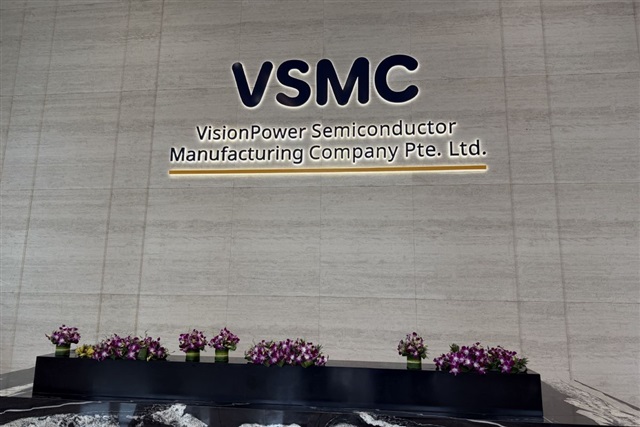
VisionPower Semiconductor Manufacturing Company (VSMC), the joint venture between Vanguard International Semiconductor (VIS) and NXP Semiconductors, opened its 12-inch wafer fab in Tampines, Singapore, on September 28.
Under pressure from rising memory prices, Samsung Electronics has raised the South Korean launch prices of its Galaxy S26 series about seven months after release. Most models went up by KRW149,600(US$110), while the top-end Galaxy S26 Ultra 1TB rose to KRW2.8215 million.
Huawei unveiled its Mate 90 smartphone series on October 1, with Richard Yu, Huawei executive director and chairman of the Consumer BG, introducing the new devices alongside a new generation of in-house chips and imaging hardware. Every model in the Mate 90 lineup, from the standard version to the flagship tier, uses Huawei's latest self-developed Tau (τ) chip platform.
Neweb Information, a Taiwan-based IT systems integrator, is targeting a late-October listing on the Taipei Exchange. Long focused on enterprise core systems, the company has expanded in recent years into AI GPU computing platforms and AI infrastructure, with AI-related revenue in the first half of 2026 already exceeding the level recorded for all of 2025.
The Taiwan New Car Assessment Program (TNCAP) on September 30 released its third-quarter ratings, publishing the MG ZS assessment under its second-edition protocol, which gave the model an overall zero-star rating. MG Taiwan responded with a formal statement, saying the model is locally produced, meets Taiwan's vehicle safety inspection standards, and carries a safety inspection certificate along with multiple active and passive safety systems.
China's BOE Technology is seeking closer ties with Samsung Electronics and LG Electronics as the display maker expands beyond panels into semiconductor glass substrates and advanced packaging.
Samsung Electronics brought global AI experts and researchers together in Seoul on September 30 for the Samsung AI Forum 2026, exploring how agentic AI and physical AI can deliver measurable business value across enterprise workflows, device-side applications, and semiconductor design and manufacturing.
Taiwan's Ministry of Digital Affairs (MODA) has launched a joint cybersecurity audit initiative aiming to reduce repeated inspections on vendors that provide the government with IT services, while strengthening government information security. MODA will expand the joint audit program in 2027.
OpenAI said it detected and blocked an organized adversarial distillation attack, with some activity linked to Chinese AI startup Moonshot AI. The company said it first spotted the effort on July 1 and saw a peak on July 24 and 25, when it detected about 16,000 related requests from more than 4,000 users.
Qualcomm and Samsung Electronics are redesigning how memory is packaged with flagship smartphone processors, as rising chip performance puts greater pressure on the limited cooling capacity of mobile devices.
China Rare Earth Innovation Technology and Beijing-based Direct Drive Tech signed a strategic cooperation agreement on September 29 to jointly develop high-performance magnetic materials for direct-drive motors, including neodymium-iron-boron magnets, flux-concentrating rings, and radially oriented magnetic rings, linking upstream rare-earth resources with robot drive modules.
China's humanoid robot market continued to expand rapidly in the first half of 2026, with shipments exceeding 19,000 units and accounting for about 77.9% of the global total. Chinese suppliers, meanwhile, represented more than 95% of worldwide shipments, underscoring China's position as both the largest humanoid robot market and the industry's dominant source of supply.
The drone market is expanding beyond military applications as commercial demand gains momentum. Following the rollout of drone logistics services for Taiwan's outlying islands, industry players see firefighting, disaster response, and inspection in areas that are difficult or dangerous for humans to access as among the first commercial applications poised for adoption.
Singapore has launched the SG Semiconductor brand to strengthen its semiconductor profile and attract talent, aiming to create a globally recognizable industry identity beyond its existing R&D system. Yee-Chia Yeo, A*STAR vice president for innovation and enterprise, said the initiative is not just a website or information platform, but a way to connect Singapore's wafer manufacturing, equipment, materials, research institutes, and universities into a more visible ecosystem.
Apple's entry into India's payments market gives its device users a new way to pay by card, but its initial reach will depend on bank and merchant integrations in a country where a domestic real-time system already dominates digital transactions. The service launched on September 30 for eligible Axis Bank Visa and Mastercard credit cardholders, placing Apple's wallet alongside, rather than replacing, India's Unified Payments Interface (UPI).