Tesla's automotive business weakened in the third quarter of 2026 as lower average vehicle prices and battery shortages pressured revenue and profit, while the company accelerated investment in artificial intelligence and its autonomous vehicle strategy. Total revenue was flat, automotive revenue fell 3% year-over-year to US$20.56 billion, and net income declined 4% to US$1.7 billion.
Imported electric vehicles captured more than half of South Korea's new electric passenger-car registrations during the first nine months of 2026, marking the first time the share of domestically made models fell below that threshold. About 258,000 new electric passenger cars were registered from January through September, with imported vehicles accounting for 51.3%, or approximately 132,000 units, according to data from the Korea Automobile Manufacturers Association cited by Money Today and Seoul Economic Daily.
Chinese automakers achieved record sales in Europe in September, doubling their monthly volume to 194,800 vehicles and capturing an unprecedented 14.6% market share. Beyond their expanding model portfolios, the surge appears to reflect accelerated shipments ahead of potential European Union restrictions on Chinese hybrid vehicle imports, expected to take effect in 2027.
Since Elon Musk publicly confirmed that Tesla and SpaceX are evaluating a potential merger, the prospect has stirred widespread speculation over what could become the largest corporate transaction in history—and whether combining two of Musk's biggest technology platforms would actually create value beyond the sprawling ecosystem they already share.
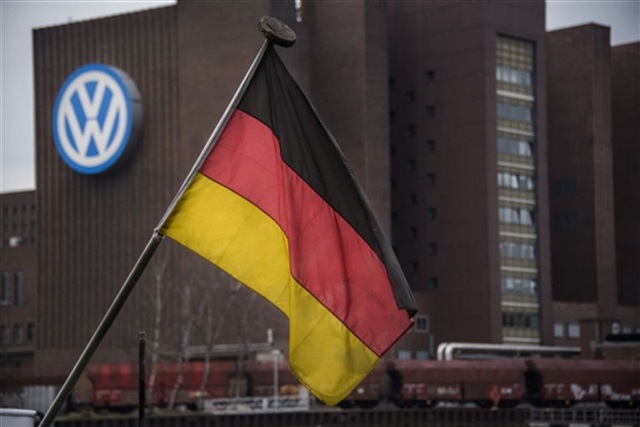
Bosch Group plans to establish Bosch Mobility as a wholly owned, legally independent subsidiary in August 2027, separating the business that generated about 60% of group revenue. The move will complete the restructuring of Bosch's four major business areas and leave the parent company focused on strategic oversight and centralized research and development.
LG Energy Solution (LGES)'s Wroclaw plant in Poland, long viewed as a major drag on the business, is nearing profitability after posting an operating loss of nearly KRW600 billion (approximately US$430 million) in 2025. A surge in European EV demand and the early conversion of some production lines to energy storage system (ESS) applications have lifted utilization, putting the plant on track to return to profit in the fourth quarter of 2026.
Chinese luxury carmakers are expanding in Europe but face barriers that differ from those in China. Brand recognition, sales and repair networks, financing, leasing, and used-car values could slow progress, while established German manufacturers retain most of Europe's premium market. The Chinese carmakers' efforts will test whether technology can overcome entrenched expectations.
China's weakening car market is challenging automakers, parts suppliers, and dealers as exports rise but domestic demand contracts. For global industry watchers, the downturn is a test of electric-vehicle resilience, subsidy dependence, and manufacturing overcapacity. Over time, planned capacity controls and corporate consolidation could reshape competition and supply chains worldwide.
Tesla's three new Roadster variants could face different regulatory pathways before they are allowed on public roads—or take to the skies.
Samsung Electronics' foundry business will extend its 8-nanometer process, now more than eight years old, into another generation with the launch of the second-generation 8LPU+ platform in 2026. The move targets demand for automotive electronics, robots, and edge AI chips while leveraging existing deep ultraviolet (DUV) production lines to control wafer costs.
U-Power, Taiwan's ultra-fast electric vehicle (EV) charging operator, has applied to list on the Taipei Exchange as the country's expanding EV population supports expectations for sustained charging demand. The company, which plans an emerging-stock listing in early November, reported higher first-half revenue but remained unprofitable as it continues investing in infrastructure.
More coverage