The future of AI robot computing power is expected to shift significantly toward edge devices, with dexterous robotic hands playing a critical role as the core endpoint. Industry experts observe that the next major breakthrough in AI robotics will come from integrating sensing and real-time computing capabilities into these agile hands.
The National Science and Technology Council (NSTC) held its 20th committee meeting on March 18, 2026, where industry players expressed concerns over the science research budget being stalled in the Legislative Yuan.
AI EXPO Taiwan 2026 will be held from March 25 to 27 at the Taipei Expo Park, co-organized by DIGITIMES, broadcaster IC975, Chung Yuan Christian University's (CYCU) College of Intelligent Computing and Quantum Information, the National Development Council (NDC), and the Taipei Expo Foundation. The theme of the 2026 edition of the annual event is "AI·X: Cross-Domain X Infinite Possibilities."
An unidentified artificial intelligence (AI) model, Hunter Alpha, has drawn industry attention in recent weeks. It has now been confirmed as an early internal test version of Xiaomi's flagship foundation model, MiMo-V2-Pro.
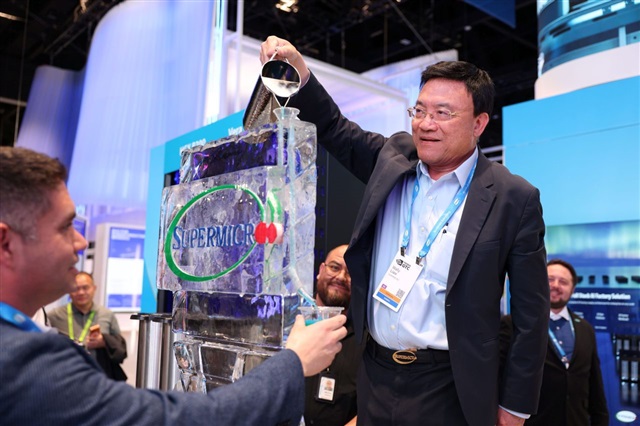
Super Micro Computer Inc. (Supermicro) has announced a swift and significant restructuring of its executive leadership following the unsealing of a federal indictment charging its co-founder and other high-level employees with orchestrating a massive scheme to illegally export advanced AI technology to China.
The global CMOS image sensor (CIS) supply chain faces a major disruption as HiSilicon, Huawei's core semiconductor subsidiary, officially enters the high-end CIS market with its first self-developed sensor chip. Partnering with strategic collaborator Gkuvision, an imaging solution provider, HiSilicon launched the new generation sports camera "Xiaotu S7PRO MAX" equipped with its proprietary sensor.
Lynas Rare Earths has achieved first production of samarium oxide at Lynas Malaysia, expanding its range of separated heavy rare earth oxides to three and reinforcing its status as the only commercial producer of separated HRE oxides outside China, developments that could affect global supply chains for high-performance magnets and advanced technologies.
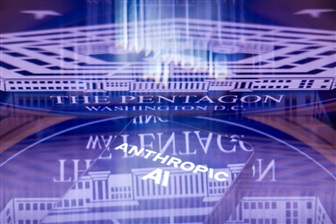
OpenAI is planning to launch a "super app" combining its ChatGPT app, browser Atlas, and coding platform Codex, according to the Wall Street Journal. The strategic shift comes as the company faces competition from rival Anthropic in capturing the enterprise and engineering market.
At GTC 2026, Nvidia unveiled a strategic US$20 billion partnership with AI chip startup Groq, licensing its LPU technology and hiring key team members to integrate advanced inference capabilities into the Vera Rubin server stack. This move positions Nvidia to define foundational rules for agentic AI while effectively blocking ASIC competitors like Google from encroaching on its market.
Since the start of 2026, Jensen Huang has twice drawn a striking parallel: likening a potential deal involving Groq to Nvidia's 2020 acquisition of Mellanox Technologies. He first made the comparison during a late-February earnings call, and again in an interview following his keynote at GTC 2026 in March.
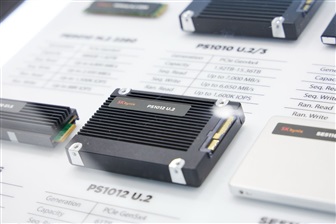
Samsung Electronics held its 57th annual shareholders meeting on March 18 in Suwon, South Korea, where it unveiled advanced memory products, including high-bandwidth memory (HBM), signaling a strategic push to strengthen its semiconductor competitiveness.
More coverage