Huawei Technologies has reshuffled its top leadership, appointing Consumer Business Group (BG) CEO Gang He to its 17-member board. The move follows the departure of former board member Vincent Peng, who left after more than 27 years with the company, where he most recently served as president of the Global Procurement Qualification Management Department. Huawei has since updated its executive directory on its official website, removing Peng's biography.
FarEasTone Telecommunications signed a cooperation agreement with Direct-to-Device (D2D) satellite communications provider Elveo Mobile on October 27 to expand satellite-to-phone services in Taiwan. The partnership will integrate D2D capabilities with FarEasTone's existing terrestrial mobile network, supporting broader coverage, stronger communications resilience, and a future integrated space-and-ground network.
India's tech push opens markets unevenly: foreign suppliers get first crack at Tata's fab, Lam courts local vendors, Jio's IPO tests its 5G pitch, and CleanMax powers AI data centers.
SpaceX has firmly established itself in direct-to-device connectivity through Starlink's expanding satellite constellation. But the space giant is now pushing beyond orbital coverage as it seeks an equally consequential position in terrestrial mobile infrastructure.
Chunghwa Telecom (CHT) has established a new subsidiary, CHT Intelligent Vision Solutions (IVS), spinning off an internal team focused on smart security and intelligent video analytics. The new company will target enterprise security, public safety, and smart-city applications, while taking Taiwanese hardware partners overseas.
Chinese smartphone brands have brought high-refresh-rate OLED displays to market ahead of Samsung Electronics and Apple, with Visionox and BOE supplying 185Hz panels for the iQOO Neo 12 and RedMagic 12 Pro+, respectively. The move sets a new standard for smartphone applications, where power consumption remains a major concern, and has drawn market attention.
Taiwan doesn't stop often. On Friday, October 23, Typhoon Champi made it stop.
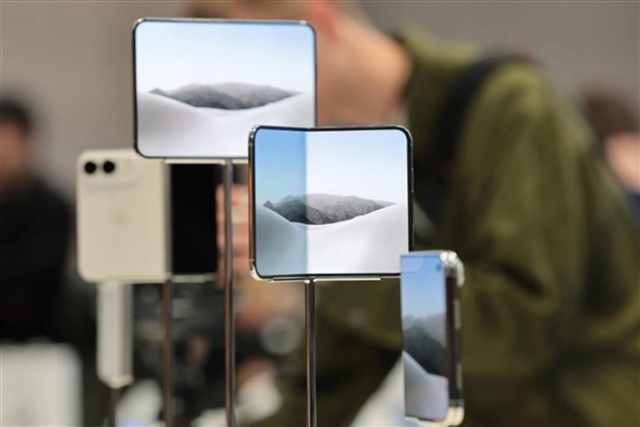
Apple Inc.'s first foldable iPhone, the iPhone Duo, went on sale in China on October 23, with limited initial supplies pushing some preorder delivery dates to late January 2027. The launch, just ahead of China's Single's Day shopping season, has become a key indicator for the country's smartphone market.
Apple's iPhone Duo has gone on sale, with pre-orders in several key markets reportedly exceeding the company's expectations. Delivery dates have stretched to late 2026 and even early 2027. The strong initial response could partly offset weaker-than-expected sales momentum for the iPhone 18 Pro series, pointing to growing consumer interest in foldable smartphones.
Oppo unveiled the international version of its Find X10 smartphone series in Spain on October 22 (Taiwan Standard Time), following the line's China launch in late September. The move marked the company's latest effort to strengthen premium smartphone shipments as competition intensifies and overall demand remains under pressure.
According to reports from Financial News, ETNews, News1 and Yonhap, Samsung Electronics' postponement of an event has intensified scrutiny of internal communications, bonus disparities, and preparations for 2027 wage talks as DX employees challenge compensation arrangements favoring the memory-focused DS division, while unions contest who should represent workers in negotiations expected to begin integrating demands in December.
More coverage