

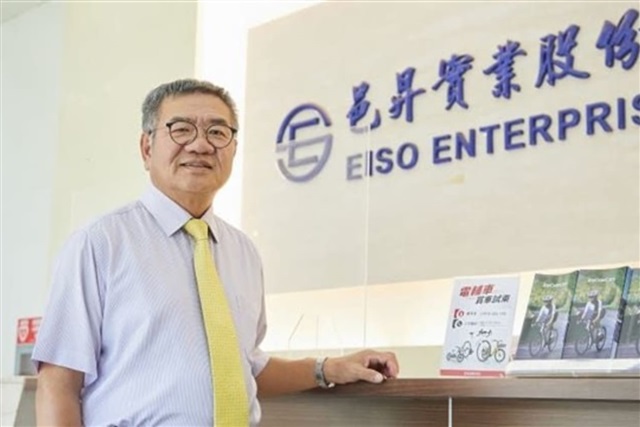
Niche printed circuit board (PCB) manufacturer Eiso Enterprise has officially opened the second-phase expansion of its new plant in Guishan, Taiwan, which is expected to raise the company's overall monthly production capacity to 1.5 times the previous level.
Investment in the second phase totaled roughly NT$500 million (approx. US$15.69 million), covering a land area of 5,700 square meters and a factory floor area of 18,600 square meters. The new facility is designed to double output and tap demand from the artificial intelligence (AI), aerospace, and defense markets.
Eiso chairman Jung-kun Chien said the company's high-end PCB manufacturing capabilities continue to advance. The new plant will introduce advanced production equipment, automated material handling, and digitalized process management to expand further capacity for high-layer-count, high-precision, high-frequency, high-speed, and thick-copper niche PCBs. The company expects this to raise the proportion of high-value-added products, boost revenue, and strengthen its gross margin structure.
Targeting AI and advanced applications
In recent years, Eiso has continued to shift its product mix toward high-value-added applications, targeting markets such as AI servers, data centers, industrial computers (IPC), automotive electronics, and drones, while actively expanding into low Earth orbit (LEO) satellite, aerospace, and defense applications.
Eiso noted that emerging applications such as AI servers, data centers, high-performance computing (HPC), LEO satellites, drones, and next-generation communications are developing rapidly. As a result, demand in the PCB market has gradually shifted from traditional mass-produced standard products toward high-end specifications featuring high-speed transmission, high density, high reliability, and high heat dissipation.
The core upgrade in the second-phase expansion of the Guishan plant is not just about adding capacity, but also about raising process technology and product fulfillment capabilities, with a focus on high-threshold processes such as fine lines of less than 1.5 mil, high-layer-count PCBs above 32 layers, thick copper above 6oz, and high-density interconnect (HDI) above 6 stages.
Eiso will also continue to strengthen its processing capabilities in high-frequency and high-speed PCBs, high-Tg materials, and special materials, aiming to secure more high-specification, high-reliability, and highly customized orders.
Building aerospace and defense qualifications
Aerospace, satellite, and drone products place higher demands on PCBs in terms of resistance to harsh environments, reliability, precision, and traceability. Eiso said it has been developing the aerospace and satellite market since 2021 and has already obtained qualified supplier status from leading global customers.
Eiso has also passed the AS9100 aerospace quality management system certification, aligning its risk management, process control, supply chain management, and product traceability with international standards, further securing an important gateway into the global aerospace, satellite, and defense supply chains.
Looking ahead, Eiso said it will continue to leverage its strengths in small-batch, diverse, highly customized, and fast-validation production. It will focus on high-reliability, high-barrier, and high-margin products, gradually increasing the proportion of niche applications such as LEO satellites, ground receiving stations, and drones, while deepening customer relationships through long-term contracts and joint development.
Record revenue in July 2026
Eiso posted July 2026 consolidated revenue of NT$185 million, nearly double the figure from a year earlier and a record high. Cumulative revenue for the first seven months of 2026 totaled NT$899 million, up 43.54% year over year.
In the first half of 2026, consolidated revenue reached NT$714 million, up 33.1% from a year earlier. Benefiting from an optimized product mix, gross margin remained around 22%. Operating profit was NT$49.93 million, while net income was NT$36.67 million. Earnings per share (EPS) came to NT$0.92, with overall operating performance outpacing that of the same period in 2025.
Article translated by Eifeh Strom and edited by Jerry Chen